
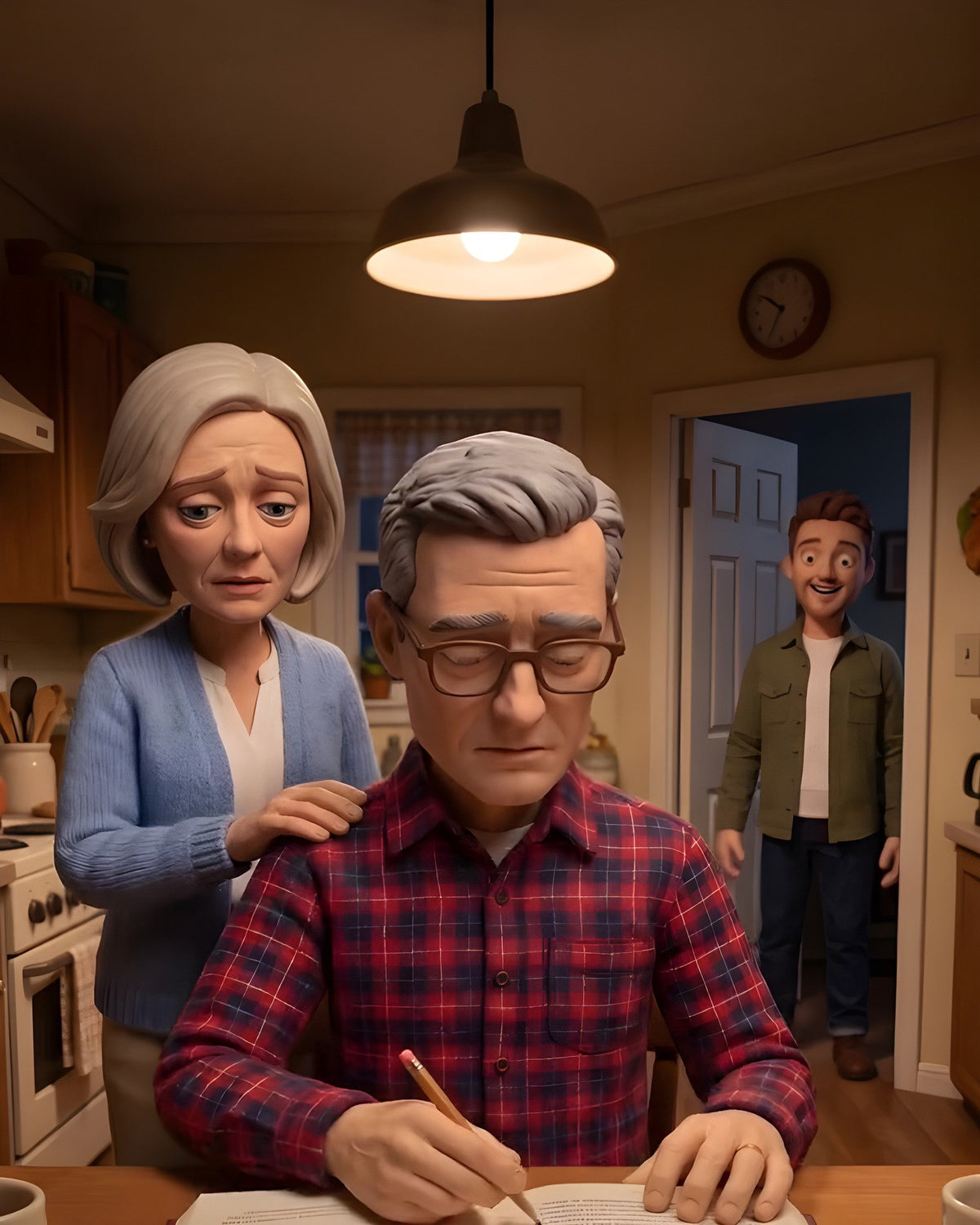
My Dad Believed Orthodox Was a Cult, until He Read These 7 Lines.
If you grew up where we did, you know the word.
Nobody says it cruelly. They say it the way you'd warn someone about a riptide.
“Isn't that the Russian one? Honey, that's a cult.”
My mom said it out loud. My dad never had to.
He'd believed it his whole life.
And if you've just watched the song, maybe some of it crossed your mind too. The icons. Praying to saints.
Do they think you earn heaven?
Below are the seven answers my dad found in the book.
And with every page number, so you can go and check.
He underlined one of them twice. And its the reason he attened my wedding.
When we set the date, Dad told me he'd come, if it was in any other church.
And it broke my heart.
I tried everything.
I argued.
I sent him videos.
I quoted verses back at him.
And every argument made him quieter, and that's how my dad said no.
Especially when he meant it.
The invitations went out. His RSVP card sat on the fridge, for weeks.
Blank.
I knew I couldn't convince him.
But maybe the book by soon to be wife gave me could.
Like father like son right?
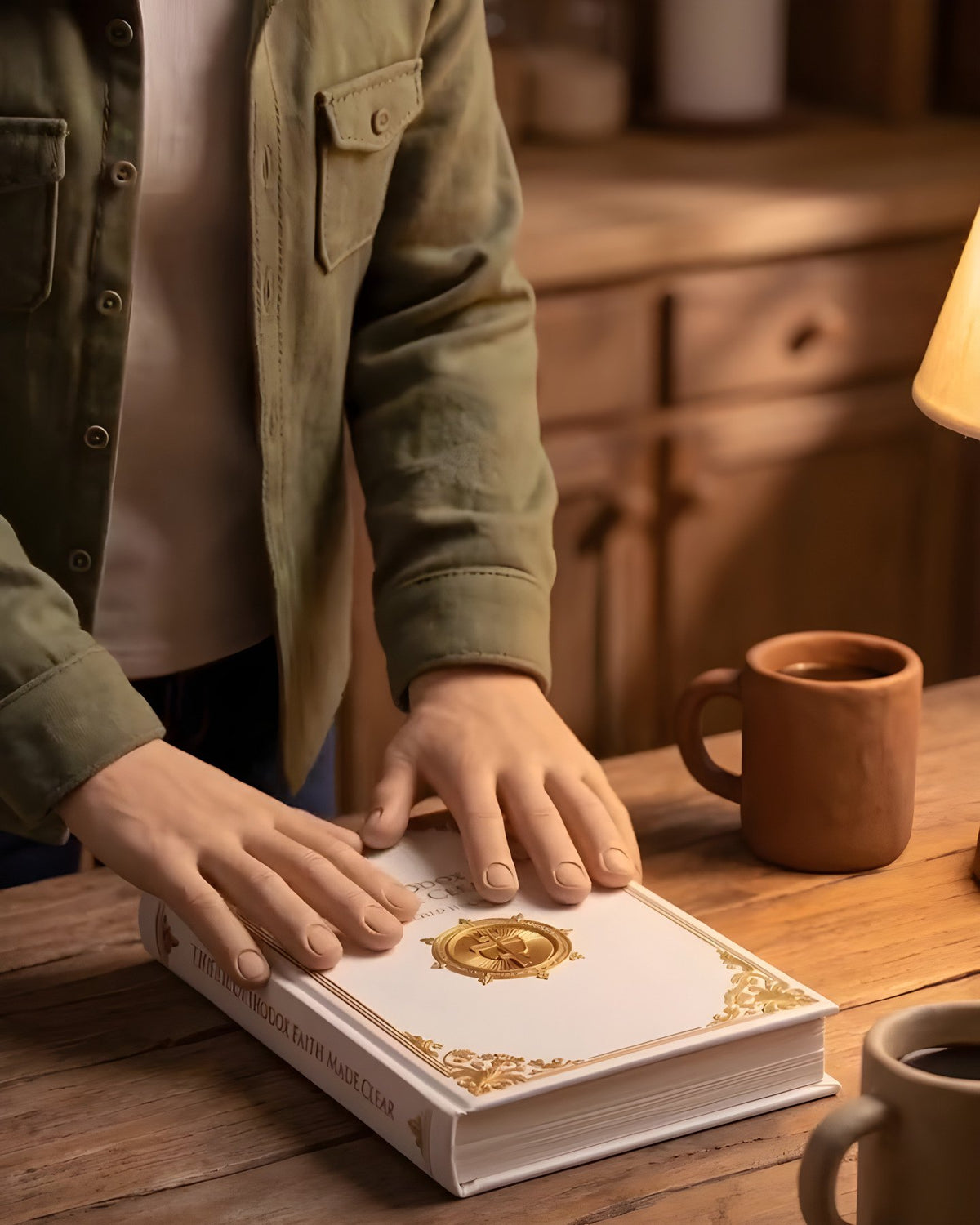
I left the book on their kitchen table: Don't trust me. Go and check.
A few weeks later I borrowed it back.
He had read it first, and I could tell he was trying to find everything wrong with it.
“Isn't it about Jesus, not which church?”
I used to say that too. I said it to her on our third date.
The book doesn't argue. It just changes the word.
It taught us the Church isn't a club that agrees about Jesus:
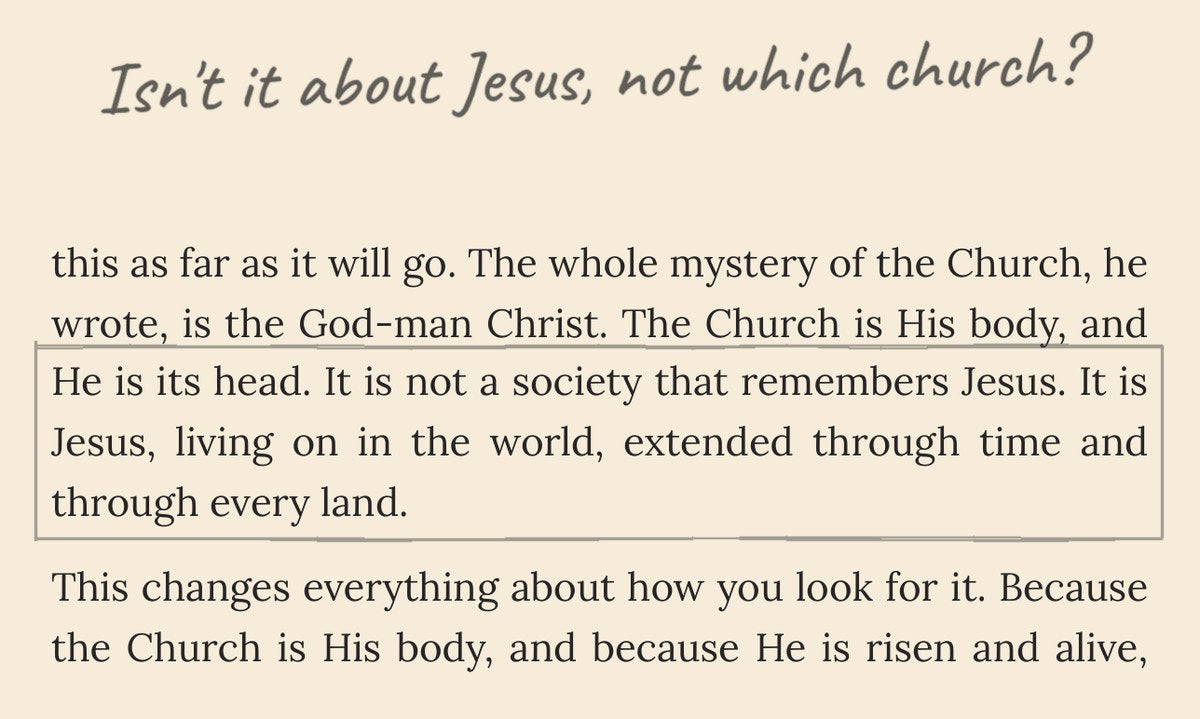
“It is not a society that remembers Jesus. It is Jesus, living on in the world, extended through time and through every land.” (p.29)
Dad drew a box around that line, without a question mark.
“So do they think you earn heaven?”
This was the one I was scared of, and so was he.
I'd spent my whole life on “saved not by works.”
The answer isn't the one you'd expect.
“You cannot earn a healing, any more than a sick man earns his recovery by good behaviour.” (p.202)
The book is honest, the Orthodox don't talk about being saved as a one time forever thing.
But a life long journey.
It says they live “not with a closed certificate of salvation, nor with terror, but with a humble and living hope in the mercy of Christ.” (p.228)
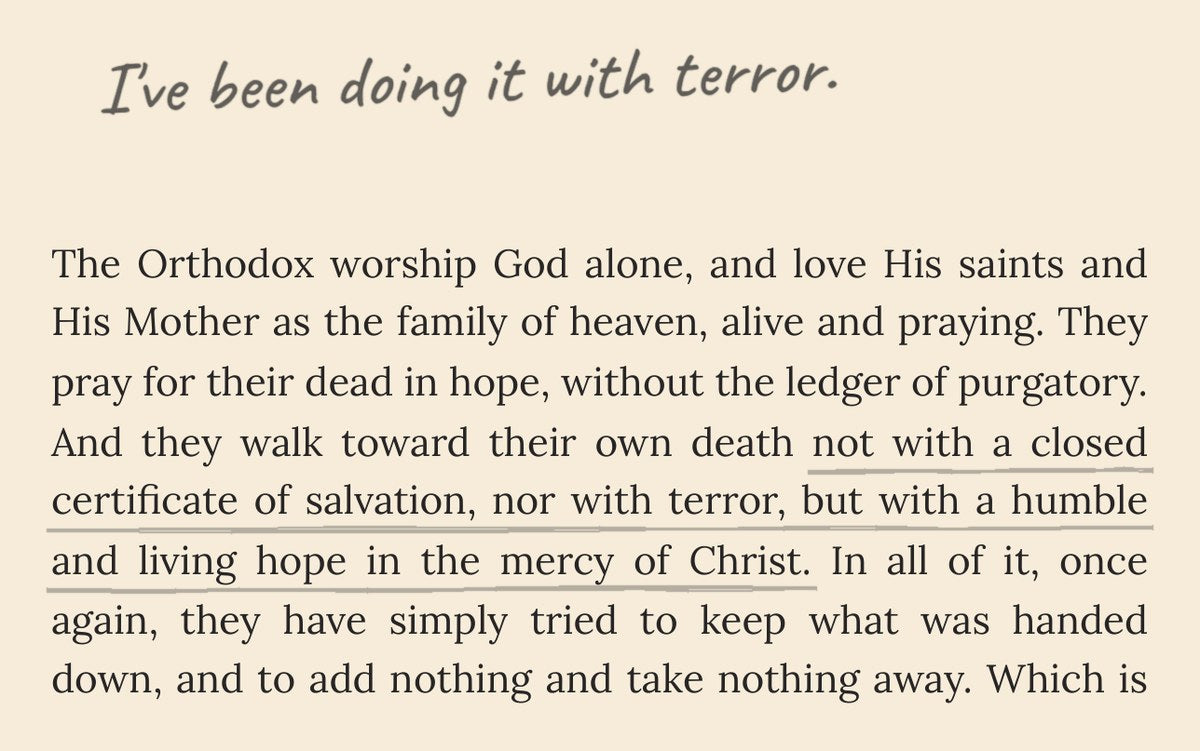
Next to that, Dad wrote: “I've been doing it with terror.”
“Isn't tradition just adding to the Bible?”
Dad had his verse ready, he always did.
Mark 7, traditions of men.
The book quotes Mark 7 too, then asks a question back:
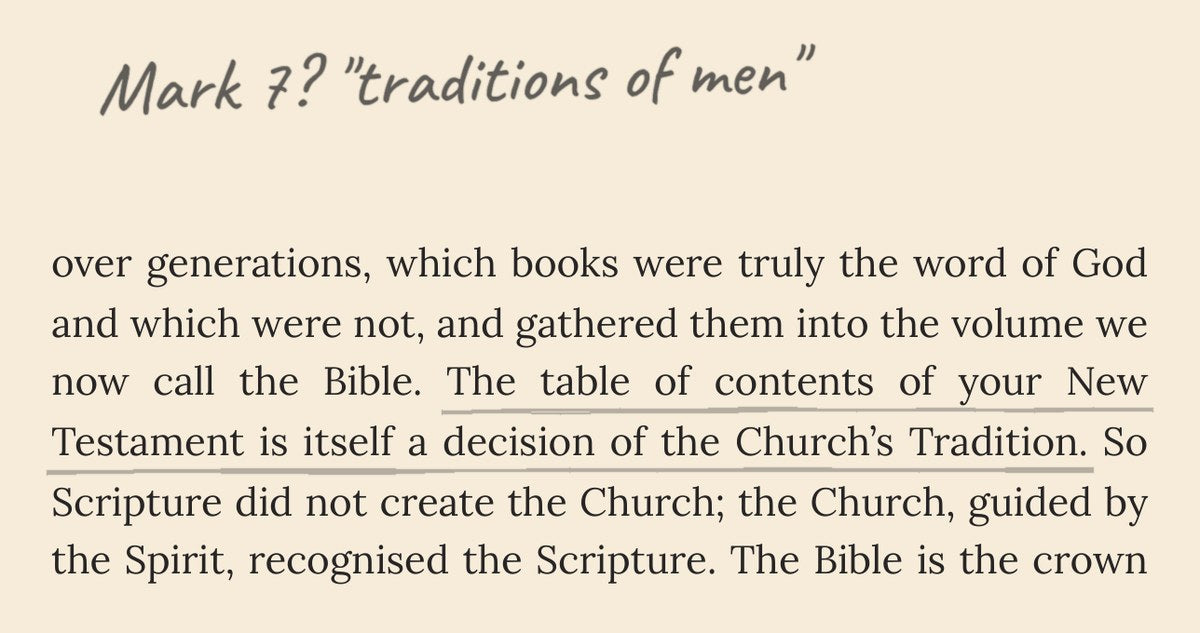
“The table of contents of your New Testament is itself a decision of the Church's Tradition.” (p.194)
Who decided which books went in the bible?
The Church did.
First Century Christians couldn't read or write, so how did some become saints?
Traditions and teachings by the one true Church.
And reading the bible with that Church isn't adding to it, its understanding it the way Jesus wanted us to.
“Aren't those idols?”
The first time I walked in, the icons scared me more than anything else.
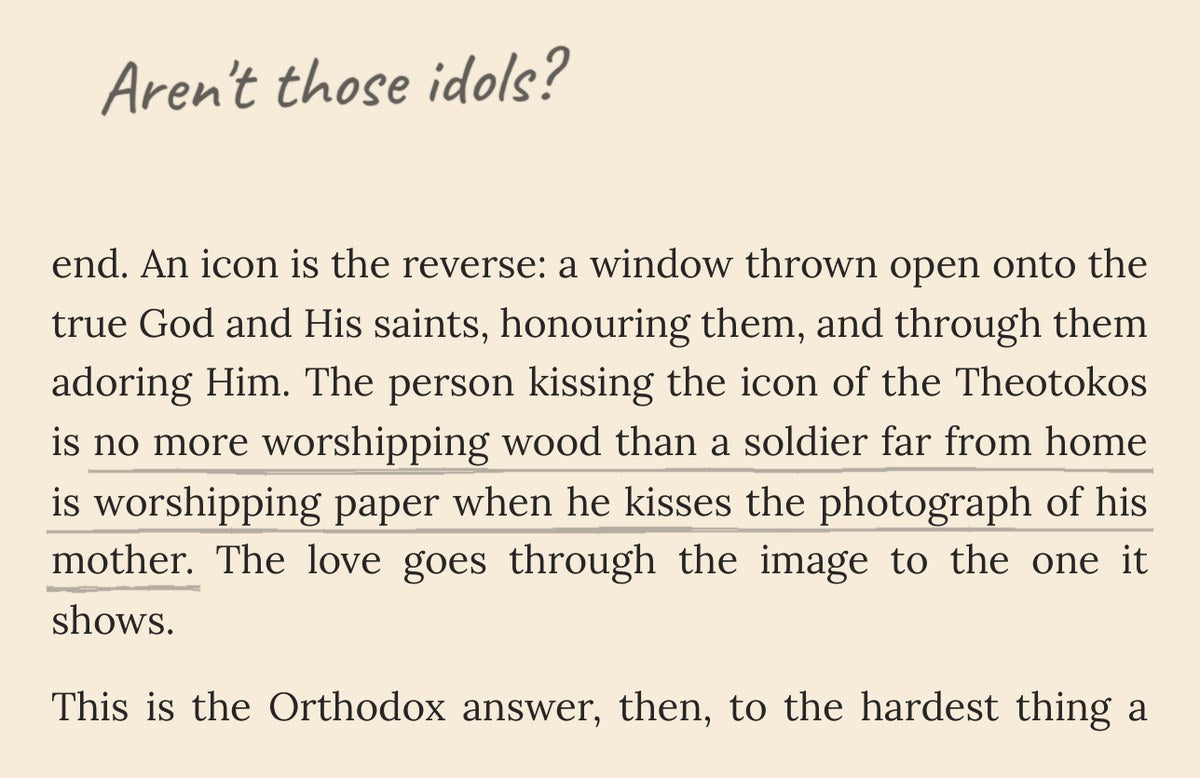
“The person kissing the icon of the Theotokos is no more worshipping wood than a soldier far from home is worshipping paper when he kisses the photograph of his mother.” (p.135)
And the reason icons exist is because God took a face, so that face can be shown.
“Didn't they split off too? Has it REALLY never changed?”
Fair question, I couldn't believe it either, and the book doesn't dodge it.
It says on page 6 that “where the history is ugly, it says so, and where the Church has failed, it admits it.”
It gives the dates (1054, and the sack of Constantinople in 1204) and draws one line:
the way the faith is explained has changed, and the faith itself hasn't.
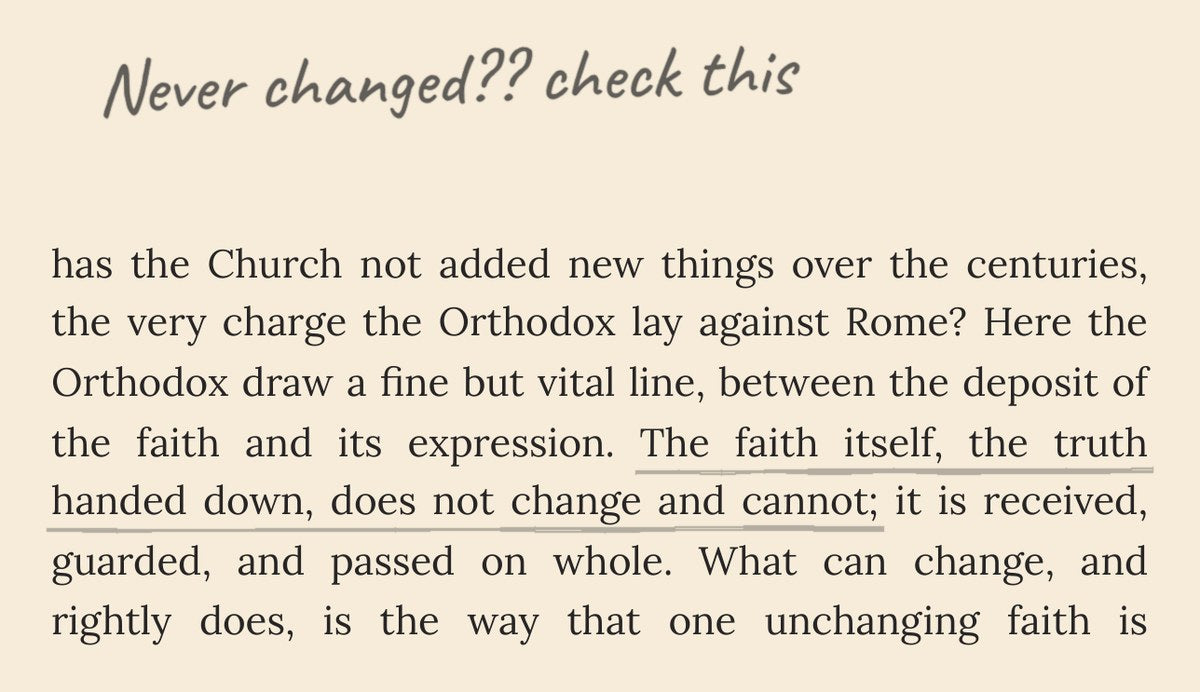
“The faith itself, the truth handed down, does not change and cannot.” (p.198)
Dad wrote “check this” next to it. And I think he did.
“Praying to saints? There's ONE mediator.”
The longest note in the book. Dad wrote out 1 Timothy 2:5 in full.
The book agrees: worship goes to God alone, and it says so in plain words.
What it describes is something every Christian already does:
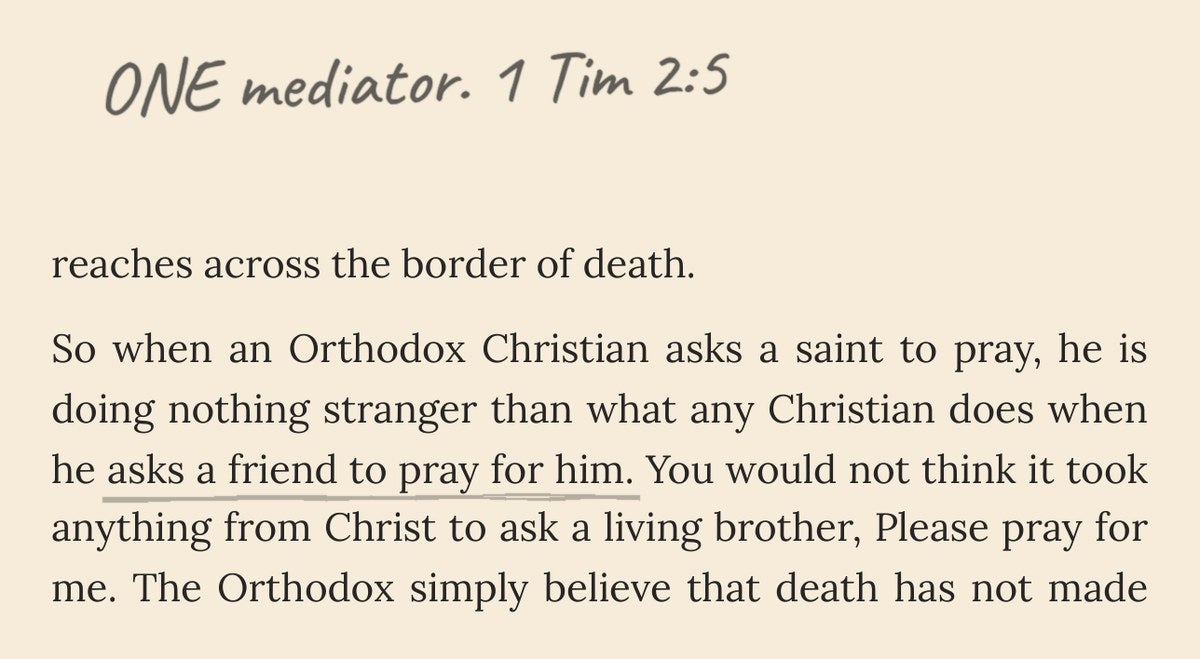
“He is doing nothing stranger than what any Christian does when he asks a friend to pray for him.” (p.139)
Then a line I didn't expect:
“None of this is required of anyone, and that should be said plainly.” (p.142)
“Praying for the DEAD?”
This is the one, that made him come.
And the answer is barely a sentence.
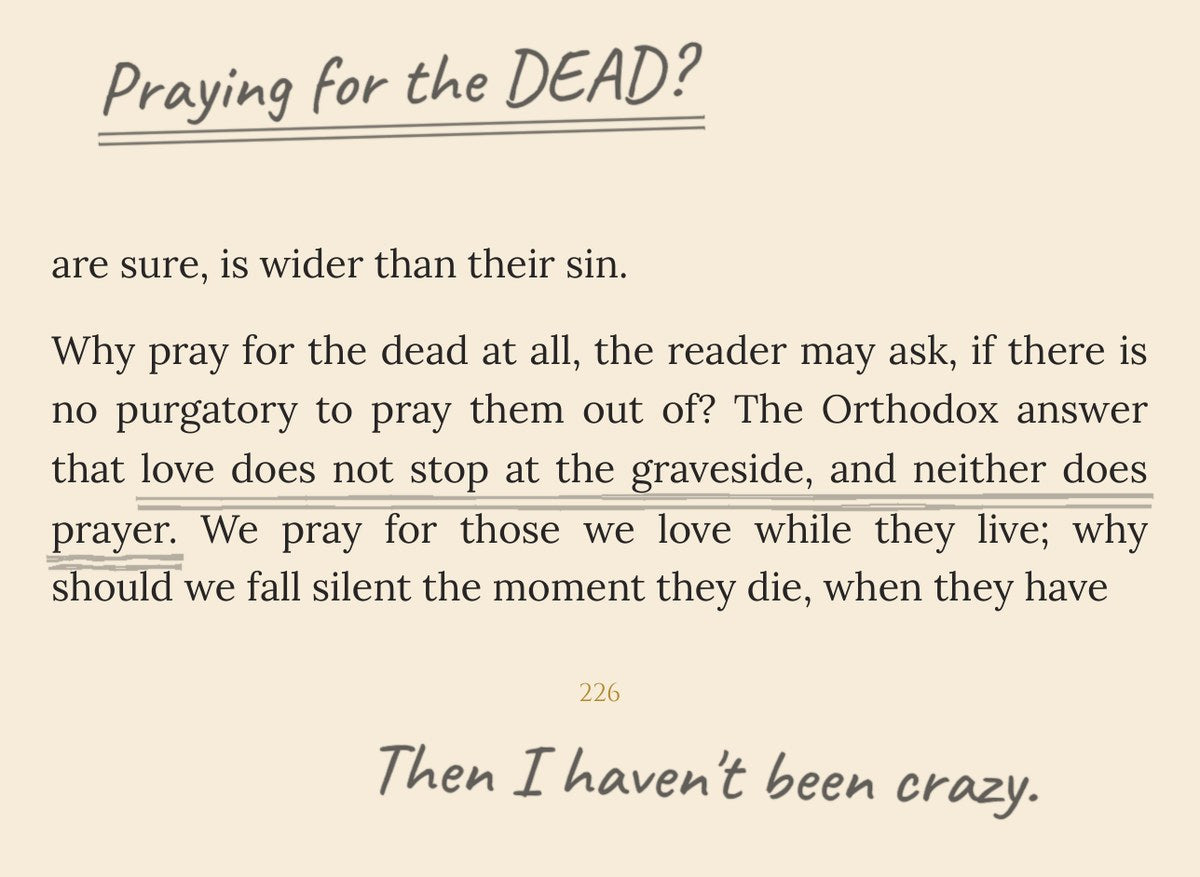
“Love does not stop at the graveside, and neither does prayer.” (p.226)
It's careful about what it doesn't know. No purgatory, no map of the afterlife. “Exactly how they help, the Orthodox do not claim to know, and they are content not to know.” (p.227)
Under his two lines, Dad wrote: “Then I haven't been crazy.”
Three words
Near the end, the book's whole answer to everything comes down to three words: “Come and see.” (p.230)
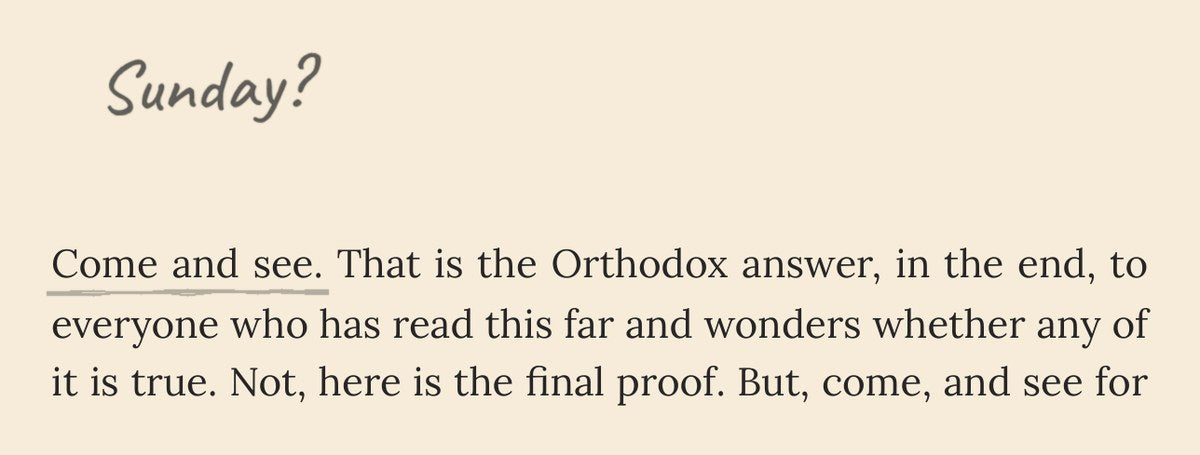
He came that Sunday, and saw.
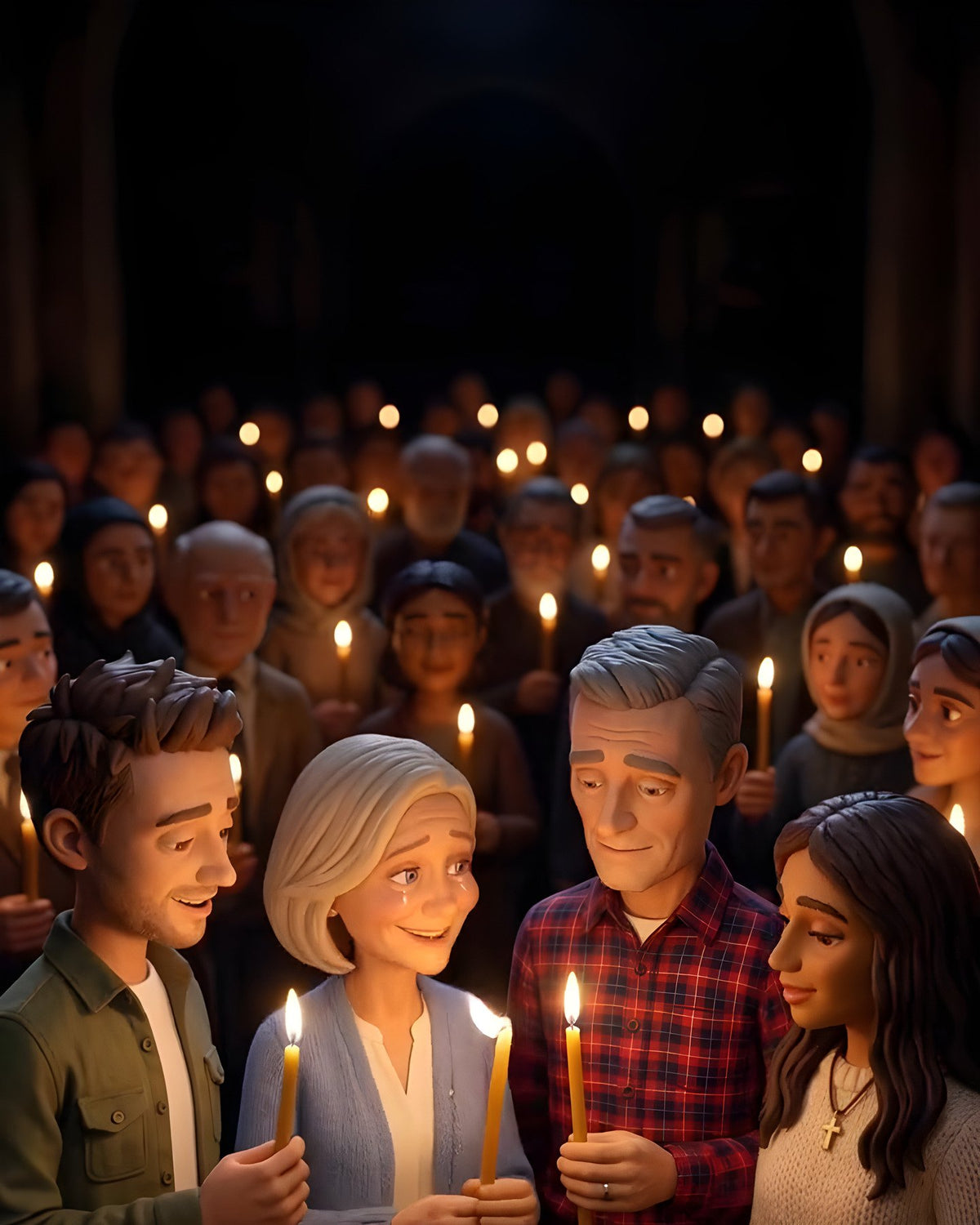
That Easter he stood at the back with Mom, holding a candle.
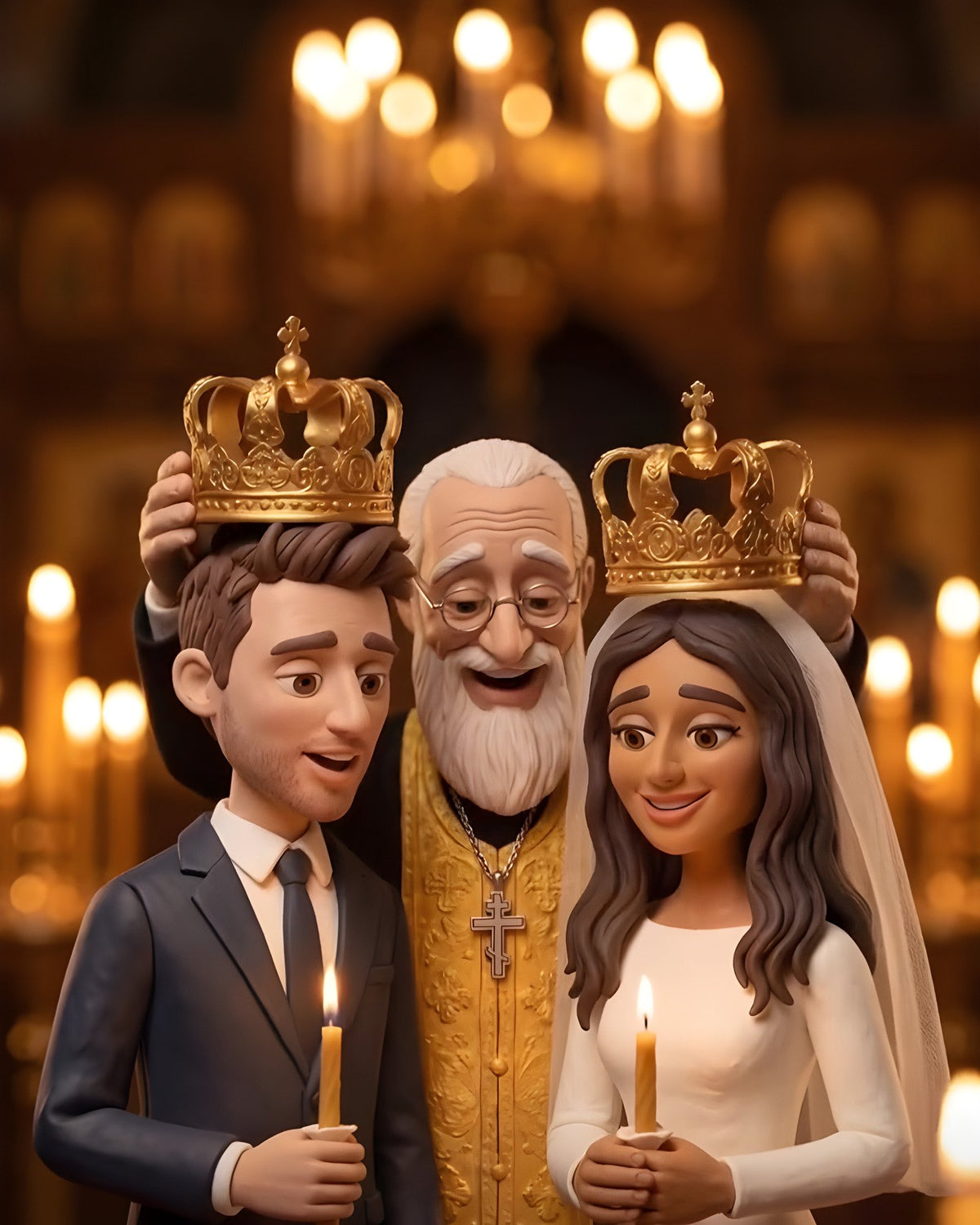
A year later, her grandfather put the crowns on our heads.
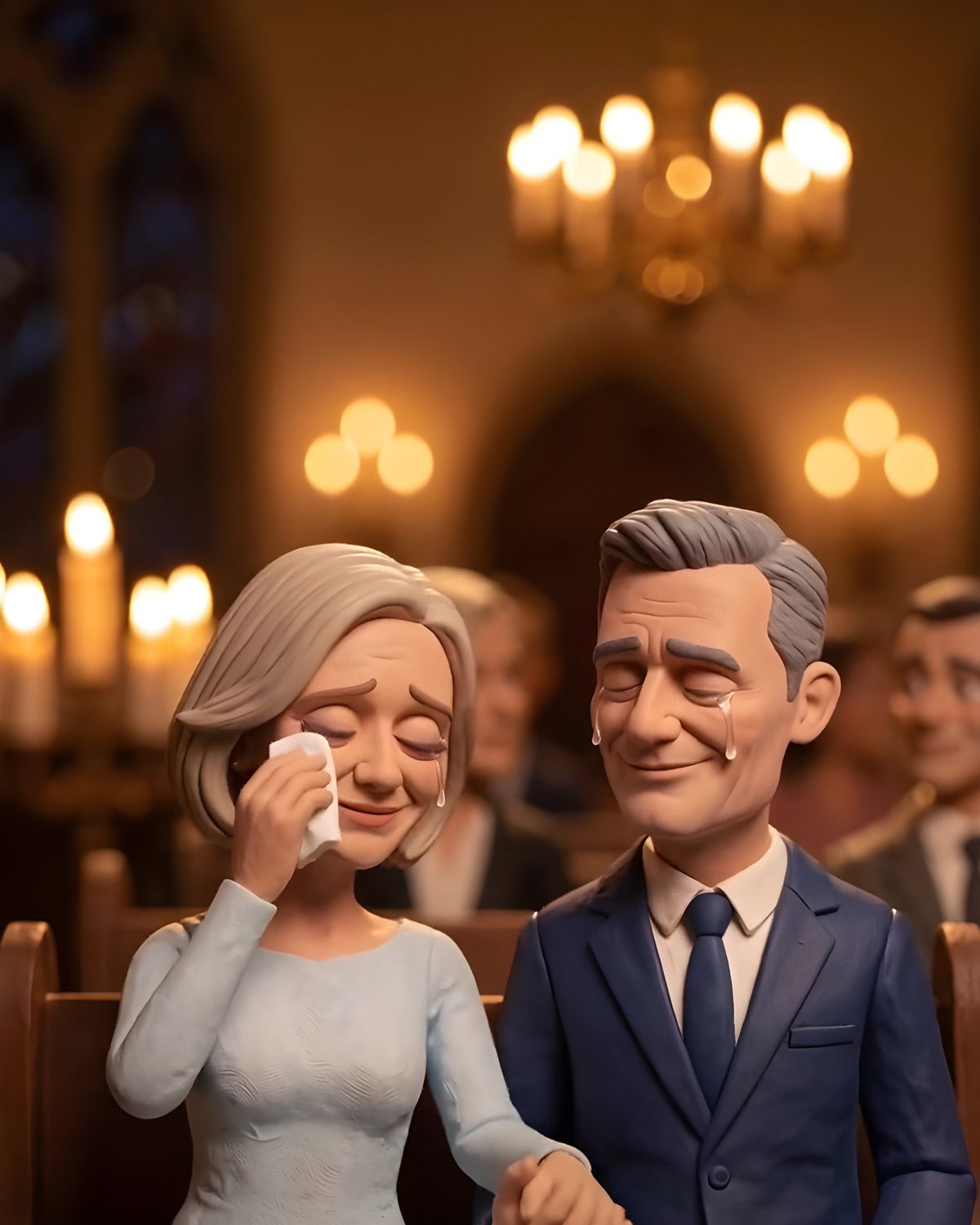
Dad was in the second row. In the church he'd called a cult.
He still has the book.
And He won't lend it out.
Too many pencil marks.
If you've never walked in
Nobody expects you to understand the service the first time.
No one judges if you stand at the back.
“No one is rushed. The Church has waited two thousand years; she is in no hurry, and neither need you be.” (p.232)
And if the nearest church is two hours away, that's what the book is for.
So the first visit you can have at your kitchen table.
Why this book exists
Why hadn't Dad found any of this before? The answers were there, just never anywhere he'd look.
Milan and Archangel, who co-founded UnbrokenVine with the mission of spreading Orthodoxy in America put it plainly:
“The answers exist, but they're buried in long, academic books most people will never open.”
So they built one book from these sources:
- Scripture
- the Nicene Creed
- the Divine Liturgy of St. John Chrysostom,
- Writers like, St. Nikolai Velimirović
With each source is listed at the back.
So you can go and check.
They'll tell you straight:
it isn't an official publication of the Church, and it isn't tied to a diocese, a monastery or a big publisher.
Parish priests are reading it and using it, and Unbroken Vine supplies it directly to parishes.
What readers are saying
“I'd always found praying with images strange and a little uncomfortable. That chapter didn't argue at me, it just explained the reasoning behind it.”
Susan A · USA“That's not a complaint about my church, it simply was never taught.”
Samuel S · USA“Bought one for myself and ordered another for my father-in-law the same week. It's the rare book you can hand to someone without it feeling like a lecture.”
Beatrice L · USA


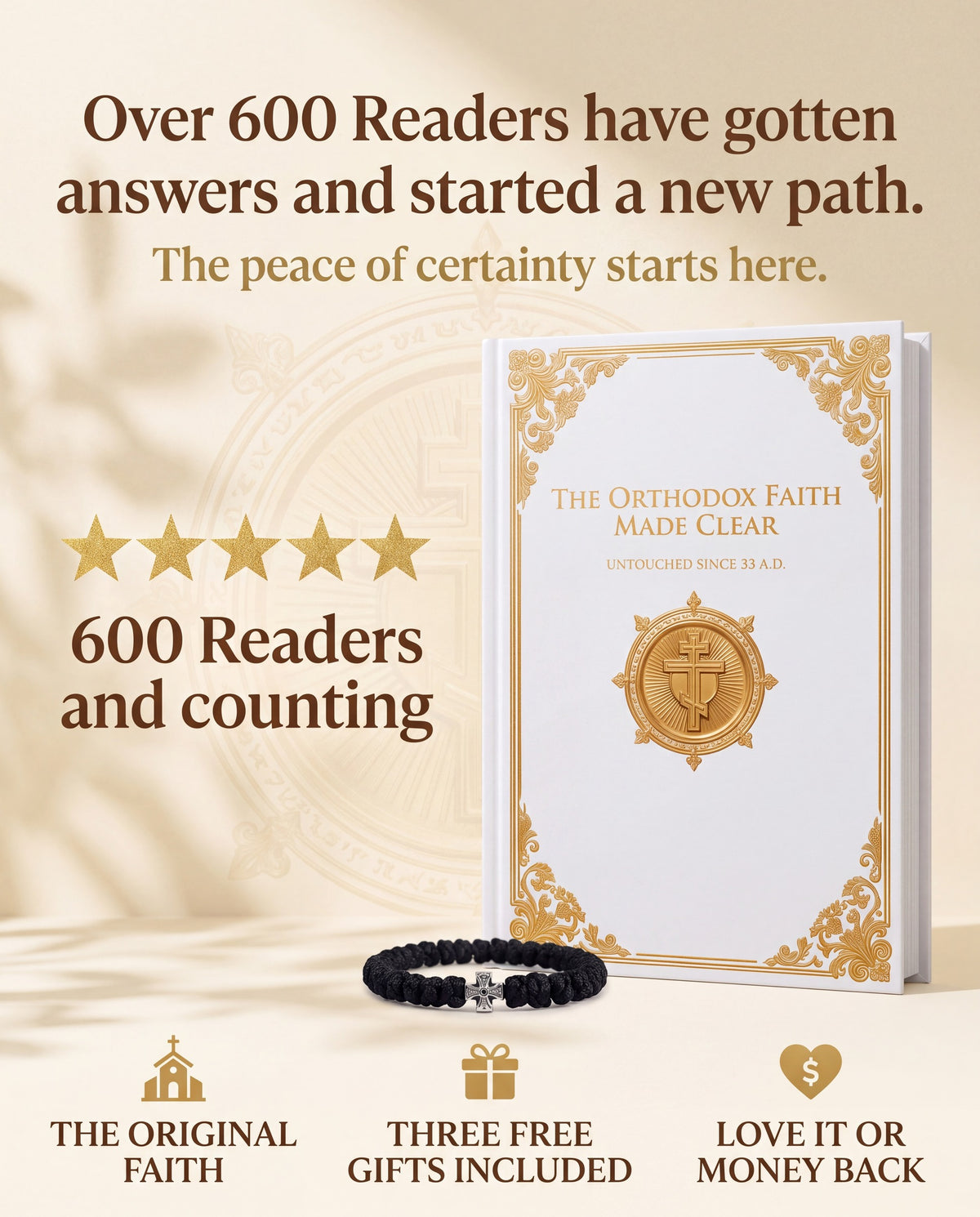

Two thousand years, made clear
- What Orthodox Christianity actually is. What “Right belief” and right worship actually look like. - Pg. 22
- What happened to the church Jesus built. One Church, born at Pentecost, remaining unbroken. - Pg. 28
- How 45,000 denominations came to be. The Great Schism, then the Reformation. - Pg. 36
- A Sunday in the ancient church. The Divine Liturgy walked through the way Peter structured it. - Pg. 115
- Why they pray with pictures. A window vs worship. - Pg. 130
- How to get to Heaven. Grace, and what "faith without works is dead" really means. - Pg. 201
- The communion of saints. The living and the departed, in your household. - Pg. 138
- How to take your first step. A simple prayer rule, and how to find a parish. - Pg. 170

Clear enough for any age, beautiful enough to share
Whether you're reading it for yourself, sharing it with your family, or giving it to someone who's been quietly searching as well, every page is clear enough for any age to follow.
Watercolor and gold illustrations carry the meaning and the words stay simple, so it makes sense from the very first page, even if you've never heard the word Orthodox before.
Testimonials

I finally understand the timeline
Catholic 1054, Protestant 1517, and I had never once stopped to ask what came before any of that. Seeing the whole thing laid out from 33 AD forward changed how I read church history.

One idea per page, and it works
I've started plenty of books like this and stalled by chapter three. This one moves. Each spread makes a single point, finishes it, and moves on. I read it over two evenings.

The illustrations are doing real work
I expected decoration. Instead the pictures carry half the explanation, especially in the sections on worship and icons. I understood things there that I'd never understood in words.

It treats you like an adult
No fear tactics, no hard sell, no closing chapter telling me what to do about it. It lays out the history and lets you draw your own conclusion. That is rarer than it should be.

Answered the question I'd had for years
Why are there so many denominations if there was one church? Nobody had ever given me a straight answer to that. This gave me a straight answer, with dates attached.

Good enough to leave out
The gold foil and the cream linen are the real thing, not a print effect. It's been on our table a month and three different guests have picked it up and started reading it.

Clear without being shallow
I worried that made clear would mean dumbed down. It doesn't. It explains the councils and the schism properly, just in plain words. My teenager read it after me and followed all of it.

The chapter on icons alone was worth it
I'd always found praying with images strange and a little uncomfortable. That chapter didn't argue at me, it just explained the reasoning behind it. It makes sense to me now.

Sixty-six years in church and I knew none of this
I could not have told you what happened in 1054. That's not a complaint about my church, it simply was never taught. Now I know, and a lot of other things fit around it.

Ordered a second copy
Bought one for myself and ordered another for my father-in-law the same week. It's the rare book you can hand to someone without it feeling like a lecture.


Goes well with your book
-
-
-
 Sale


